
Bridging the Gap: Maintaining Frictionless Guest Experiences in the Era of MAC Randomization

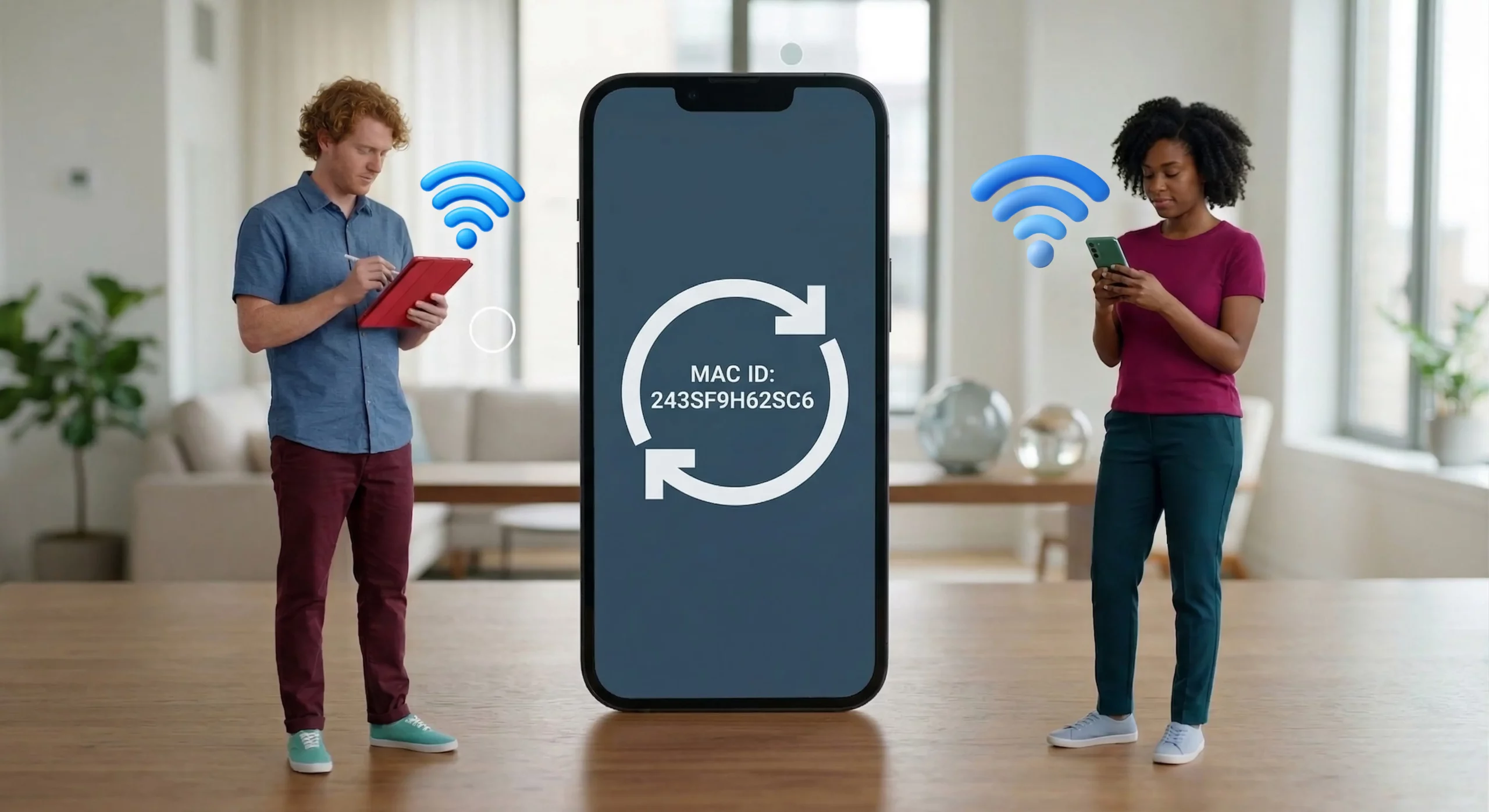
MAC Randomization and Its Impact on Physical Spaces
During the summer of 2020, Apple announced an important update as part of the release of iOS 14 and watchOS 7. Initially, Apple intended to change the MAC address every 24 hours and avoid Wireless Network SSIDs to remember devices, thereby preventing SSIDs from tracking and profiling users over time or recognizing repeat customers.
This caused a shock across the Wi-Fi community, network operators, and companies that rely on MAC address-based operations and customer experience. Likely due to pressure from industry players, Apple adjusted its position and announced that it would not randomize the MAC address every 24 hours. Instead, the randomized “Private Wi-Fi Address” remains the same when a device reconnects to a specific network SSID it has previously used. Therefore, SSIDs are still able to remember guests during their subsequent visits to that specific network.
What is a MAC Address and How Does Apple Randomize It?
MAC is short for media access control, a unique identifier for each electronic wireless device that connects to a Wi-Fi network. Each hardware chip has a static Hardware MAC address, which is used for various purposes in the wireless industry by Network Operators as well as enterprises/companies / physical spaces/homes. Some examples of use of hardware MAC address include parental control, MAC authentication at workplaces, recognition of repeat guests and visitors for physical spaces.
Traditional Uses of Static MAC Addresses:
– Parental Control: Restricting access based on specific device IDs.
– MAC Authentication: Automating secure logins at workplaces.
– Guest Recognition: Identifying repeat visitors in physical spaces (malls, hotels, retail).
The Role of MAC Addresses in Guest Wi-Fi Experiences
IPERA, its channel partners, and customers have used the static MAC address to make the WiFi experience more convenient for guests, recognizing repeat customers to provide them with a better and frictionless Wi-Fi experience. Previously connected visitors and customers are recognized whenever they visit the same location again, and they won’t need to re-enter their login credentials each time they visit. Credentials are remembered, and they are automatically signed in to the network with a welcome message. This function is called Smart Login on IPERA Starling platform, and the MAC address is used to detect repeat customers.
Another benefit that companies gain from static MAC addresses is to understand customers’ behavioral insights, such as visit patterns, dwell time, presence, etc., for better customer communication and tailored offers at the right moment. A repeat visitor or loyal shopper could receive a welcome back text message, including a contextual, targeted special offer upon arrival at the store.
– Visit Patterns: Understanding how often a customer returns.
– Dwell Time: Measuring how long a visitor stays.
– Presence Analytics: Identifying footfall and density.
The Three Main Impacts of MAC Randomization
While a static MAC address made it easy for companies with physical locations to market and get to know more about their guests and visitors. This is the reason why the WiFi industry has grown to be a critical part of modern marketing. However, having a static MAC address has raised concerns around customer privacy. Many customers feel that they don’t have control over their own data, and they don’t have a clue about how their data is used when they consume a mobile app or an online service. Therefore, privacy has become a concern for enterprises like Apple, and it has been a while since Apple has been trying to improve consumer privacy. Here is the latest article around this topic on the Apple website.
From Apple website:
To communicate with a Wi-Fi network, a device must identify itself to the network using a unique network address called a media access control (MAC) address. If the device always uses the same Wi-Fi MAC address across all networks, network operators and other network observers can more easily relate that address to the device’s network activity and location over time. This allows a kind of user tracking or profiling, and it applies to all devices on all Wi-Fi networks.
To reduce this privacy risk, iOS 14, iPadOS 14, and watchOS 7 use a different MAC address for each Wi-Fi network. This unique, static MAC address is your device’s private Wi-Fi address for that network only.
Similarly, Android and Microsoft operating systems are also adopting the Privacy approach.
There are three impacts of the MAC Randomization for the Wi-Fi Analytics firms and physical spaces
1) Lack of Guest Recognition Across Multiple Locations & Wi-Fi Networks
Captive portals are web pages presented to users during initial network connection, typically for guest networks. They’re used to deliver legal terms and agreements, for guest/visitor login, to capture some guest info in exchange for connectivity, and for authentication/billing purposes, such as usage-based hotspots. In many cases, captive web portals use the MAC address as the device anchor, and so the user’s authorization state is connected to the MAC. If the MAC ever changes, the infrastructure will force the user through the portal again, creating a user-experience challenge.
The good news is that an individual location’s WiFi network is not affected. After upgrading to iOS14, a user’s device will have to reconnect again using credentials. However, during the following visits, their mobile device will have the same private MAC address, and it will be automatically connected.
However, for companies having multiple locations, multiple brands, multiple wi-fi networks, and multiple SSIDs will face the issue of MAC randomization, because each network will have a different private MAC address. As an example, if a holding company runs several different brands/stores, not having a static MAC address would make it difficult for each brand to offer a smooth and overall guest WiFi experience — even if they’re all owned by the same company.
The reason is that Guest Wi-Fi management solutions rely on the MAC address to recognize a repeat guest. With the new MAC Randomization, a private MAC address is generated by the mobile device for each SSID. The location’s WiFi network won’t be able to recognize a returning guest even if they’ve been to the company’s other locations in the past or have shopped the brands that are owned by the same company.
2) Visitor Journey Across Multiple Locations
Companies will still have visibility on Wi-Fi Location Analytics & Insights for an individual location. They will be able to see customer footfall/density and heatmap data, as well as customer flow & path analytics in venues like airports, shopping malls, theme parks, etc. However, they won’t have the ability to build a history of guest activity across various locations and brands — owned by the same company— so they will no longer be able to build an entire brand journey using their MAC address.
3) Contextual Targeted & Tailored Customer Communication
Building customer communication strategies based on Wi-Fi location analytics is one of the key components of the modern Guest Wi-Fi system for physical spaces. Instead of bulk marketing, digital marketing teams build tailored communication strategies that benefit both venue operators and consumers. MAC Randomization plays a great role in understanding repeat visitors. For an individual location, it will be possible to understand the behavior and segment customers based on their visit patterns & behavior. However, if multiple locations use multiple Guest Wi-Fi networks or SSIDs, even owned by the same company, connecting with guests based on their previous activities in multiple locations or across multiple brands — owned by the same company— won’t be possible anymore.
The way forward for a frictionless guest experience
The MAC randomization story will not end here, with iOS 14. There was a push back from Apple to minimize the impact on operations for network operators. However, the industry is heading towards more strict policies. It’s time to protect privacy and, at the same time, redesign the Guest WiFi experience most seamlessly.
IPERA has been taking steps to implement privacy functionality as part of the Starling Guest Experience & Analytics portal. At the same time, IPERA enables companies to power their Guest WiFi and get the most benefit from their investment
IPERA is building alternatives for companies to continue providing a frictionless & seamless Wi-Fi experience. At the same time, they collect customers’ personal data while respecting their privacy, yet providing greater value to their guests.
Contact IPERA today and request a demo to see IPERA Starling platform in action. Empower your Guest WiFi experience and transform Guest WiFi into business opportunities that generate value for your business