
Captive Portal Explained: Guest WiFi Authentication, Security, and Benefits

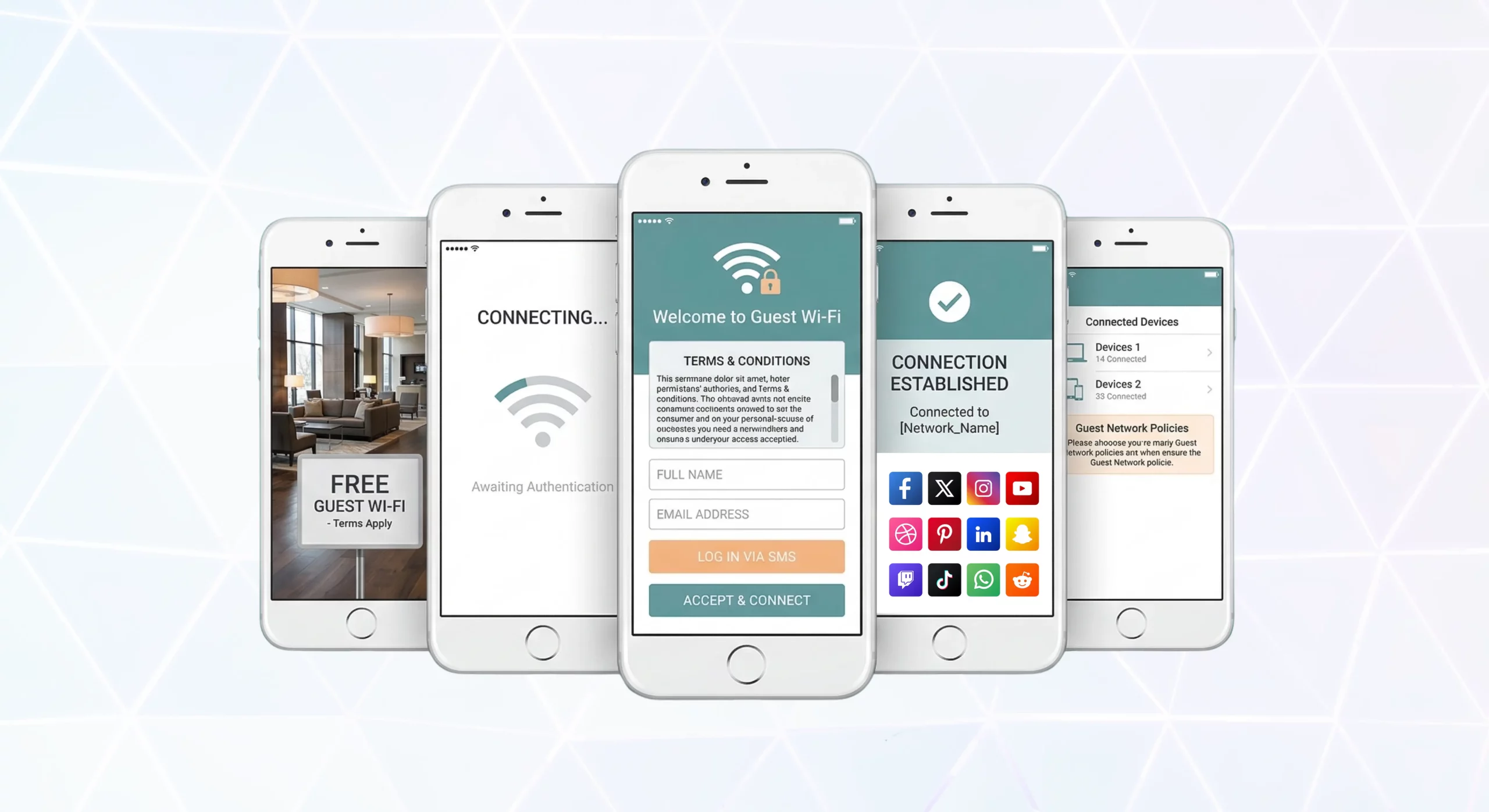
What is a Captive Portal?
A captive portal is a web page that requires users to visit in order to access Wi-Fi networks in public places. Captive portals are often used together with hotspot systems such as Guest Wi-Fi systems, and are the user authentication points that come up before accessing Wi-Fi networks. Users who wish to use a guest Wi-Fi are greeted with a captive portal page after logging in.
Captive portals direct users to an external page before granting connection to public wireless networks. The authorization process takes place via different channels, such as sending out confirmation SMS messages. Captive portals utilize universal access control methods that rely on three principles: authentication, authorization, and accounting.
Different types of captive portals use different authentication practices. The most prominent ones are internal or external captive portals and internal authenticated or internal acknowledged captive portals.
Why Are Captive Portals Important for Wireless Guest Access?
Captive portals are important for both the end-users and service providers. Mandatory user authentication steps that are presented through a login page require users to agree to certain conditions in order to access public wireless networks. Therefore, a captive portal page ensures the privacy of data and the protection of user activity.
Captive portals also function in a way to protect guests who are connected to public Wi-Fi networks from any legal or security issues. Users must agree to the presented terms of access by filling out a form or logging in via social media accounts. In other words, they are asked to share some personal information with the portal. Complying with the prior terms and conditions of access ensures users’ data privacy.
Why Should Businesses Use Captive Portals?
The terms and conditions imposed through captive portals allow for protecting your business by limiting legal liability. Explicit configuration of freedoms and restrictions beforehand gives full protection against cyber threats.
The main benefits of captive portals for service providers are protection against possible unauthorized activities, such as illegal downloads or data pirating. Captive portals enable the service providers to determine their specified traffic policies that essentially prevent access to unsecured content.
A controlled Wi-Fi connection also prevents possible abuse of service by some users, including its overuse. Captive portals ensure control over key parameters such as connection time, download speed, and bandwidth consumption. Restricting the bandwidth available to a single user is crucial to prevent unnecessary network loading. The separation of the network used by guests is a preventive measure against all kinds of malicious acts. It essentially limits permissions available to guest users in order to enhance the overall security of the network. Therefore, the service providers are rendered exempt from any sort of liability.
On the other hand, captive portal pages offer multiple marketing opportunities for businesses, like monitoring user engagement and gathering specific information. Data capturing on key variables, including the number of people connected to the service, frequency of users’ visits, or visitor demographics, is possible through captive portals. Such information creates multiple advantages to capture users’ attention. Customized welcome pages through captive portals can be used for targeted marketing practices when they are built upon specific data. Thus, guest Wi-Fi networks can be turned into niche advertising platforms with the opportunity of addressing targeted audiences.